Wednesday, September 25, 2013

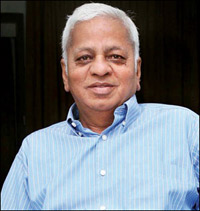
D. Raja (CPI national secretary and MP) lists out core labour issues that need immediate attention of government

Q. With power comes its misuse. Do you see this as a probable reason why management is not sensitive to the needs of its labour force?
A. Certainly, labour unions are a collective bargaining force and there is nothing wrong in that. Workers form a collective category and advance their common demand. Trade unions have their own democratic functioning; the members meet, discuss and share their experiences and formulate their demands accordingly. Fighting absenteeism, watching workers putting their optimum efforts during work hours is also their work.

Even the International Labour Organization (ILO) has a worker-education programme that aims to make workers more aware of their rights, duties and work culture.

Q. Why do we often find management against these unions?
A. No management has the power to hire and fire during such a period. Disciplinary actions are taken and disputes can be taken to labour ministry and commissioners. However, no government or management can have the power to hire and fire at its whim and this is exactly what the management demands. Management cannot accuse trade unions and workers for not giving their full cooperation in the production, for trade unions themselves talk about a new work culture.

Q. Is there lack of awareness amongst the labour class when it comes to workplace rights?
A. I do not think so because nowadays trade unions are quite active. For instance, Tamil Nadu recently organised an awareness campaign that explained labour problems; what are the present struggle, what are the demands.

Moreover, many agricultural workers unions are demanding central legislation for workers. Political parties too take up these issues. There are independent trade unions and people go to judiciary too when their rights are denied. Click here to read more...

Like us and read IIPM Think-Tank articles on facebook

Wednesday, July 31, 2013

Thatcherism and decline in Trade Unions power and strength

Margaret Thatcher, who became the first woman prime minister of Britain in 1979, continued the policy of reducing the power of the trade unions. Sympathy strikes and closing shops were banned. Union leaders had to ballot members on strike action and unions were responsible for the actions of its members. 

Her government pledged to check and reverse Britain’s economic decline. In the short-term, painful measures were required.
Although direct taxes were cut to restore incentives, the budget had to be balanced, and so indirect taxes were increased. The economy was already entering a recession, but inflation was rising and interest rates had to be raised to control it. By the end of Thatcher’s first term (1979-83), unemployment in Britain was more than three million and it began to fall only in 1986. A large section of Britain’s inefficient manufacturing industry closed down. No one had predicted how severe the downturn would be.

Thatcher’s second term (1983-1987) opened with almost as many difficulties as the first. The government took a firm stand against industrial disputes and the miners’ strike that began in 1984 and lasted for 12 months without success under militant leadership.

The miners’ strike was one of the most violent and long-lasting one in British history. The outcome was uncertain, but after many twists, the union was defeated. This proved a crucial development because it ensured that the Thatcher reforms would work. In the years that followed, the Labour opposition quietly accepted the popularity and success of the trade union legislation and pledged not to reverse its key components.Click here to read more...

Like us and read IIPM Think-Tank articles on facebook

Friday, June 07, 2013

IIPM Publications-The education sector today needs a concerted push so that best teachers are recruited for the greater good of the nation

In another study on evaluating teaching performance, Professor Michael B. Paulsen of the University of Iowa, says that the careful consideration of the qualities of effective teaching is an important task. “No universally accepted definition of effective college teaching exists even though countless attempts have been made to identify the characteristics of effective teaching using a variety of theoretical perspectives and a range of qualitative and quantitative approaches.”

In OECD’s three-yearly PISA test of the abilities of 15-year old secondary-school students, Finland has established its reputation as one of the world’s leaders in the academic performance of its secondary school students. The OECD 2010 report focuses on salient characteristics of Finland’s education system that makes it different from other OECD countries. It talks about the incredible Finnish success in education by excluding the factors that are almost common in all the OECD countries.
The full-service schools that provide health and dental services, offer guidance and psychological counselling, and access to a broader array of mental health and other services for students and families in need, are becoming increasingly common in western countries, including Finland. Teachers there enjoy a relatively high degree of freedom. They are expected to assess students on an ongoing basis, using the assessment guidelines in the national core curriculum and textbook. Students, on the other hand, are expected to work collaboratively on projects.
India’s National Curriculum Framework (NCF) proposes five guiding principles for curriculum development. ‘Connecting knowledge to life outside the school, ensuring that learning shifts away from rote methods, enriching the curriculum so that it goes beyond textbooks, making examinations more flexible and ­integrating them with classroom life and nurturing an overriding identity informed by caring concerns within the democratic polity of the country.’ These guidelines are largely in sync with the practices of the top performing countries.
According to the NCF 2005, the fact that knowledge is constructed by the child implies that curricula, syllabi and textbooks should enable the teacher in organising classroom experiences in consonance with the child’s nature and environment, and thus providing opportunities for all children. “Teaching should aim at enhancing children’s natural desire and strategies to learn. Knowledge needs to be distinguished from information, and teaching needs to be seen as a professional activity, not as coaching for memorisation or as transmission of facts.” Read full article

Thursday, February 28, 2013

IIPM, MBA, BBA, Professor Arindam Chaudhuri, 4ps Business and Marketing, Business and Economy

Q. Enrolment in government-run schools has decreased in the last decade. There is a trend in both urban and rural areas to opt for private education. How can this gap be bridged?
A. Government pumping in more money to build schools and hire teachers as government employees is not really going to be a viable solution, as that is going to cost a lot, will take a long time and will have all kinds of implementation problems. A solution that is actually working in the United States and the United Kingdom is for the government to give vouchers to parents, which can be used by parents to send children to private schools. There can always be an equal distribution of vouchers, so that education is subsidised and children from poor families are not deprived of education.

The private schools would then compete to attract children and that would obviously go a long way towards improving the quality and efficiency of the schools. Of course it requires a big policy-level rethinking but it can be one effective solution, provided the distribution of these vouchers is made fairly effectual and efficient.

Q. Many of the government initiatives to improve internal efficiency and quality of secondary education have not really clicked. What are the probable reasons for it?
A. Improving the internal efficiency of existing government schools is an extremely challenging task everywhere in the world and it is so because reforms cannot be implemented unless teachers want to change. Teachers tend to have their own set ways of behaving and if they do not change, it would not make much of a difference.

Q. With over 350 universities and 17,000 colleges, India boasts of having the third largest number of graduates after the United States and China. But we still lag behind on the education front. Why so?
A. Firstly, I would not necessarily say that we are behind China because overall the quality of education there is not very impressive. The scenario is quite similar in both India and China. In the last ten years, the number of students graduating in both nations has multiplied several folds. Click here to read more..

Read More IIPM Related Articles
Zee Business Best B-School Survey 2012
Prof. Arindam Chaudhuri's Session at IMA Indore
IIPM IN FINANCIAL TIMES, UK. FEATURE OF THE WEEK
IIPM strong hold on Placement : 10000 Students Placed in last 5 year
IIPM's Management Consulting Arm-Planman Consulting
Professor Arindam Chaudhuri - A Man For The Society....
IIPM: Indian Institute of Planning and Management
IIPM makes business education truly global
Management Guru Arindam Chaudhuri
Rajita Chaudhuri-The New Age Woman
IIPM B-School Facebook Page
IIPM Global Exposure
IIPM Best B School India
IIPM B-School Detail
IIPM Links
IIPM : The B-School with a Human Face

Monday, January 14, 2013

It’s beyond weeding out non-performers

Marc S. Tucker (President & CEO, National Center on Education and the Economy)
Q. How would you describe the education scenario in the United States? What changes have you witnessed in the recent times?
A.
We have a decentralised system of education in the United States. The jurisdiction of the national department of education is limited. The ability to make substantial changes in the education system is restricted because authority for decision-making is widely dispersed.

The fiscal crisis that shook the world recently had a significant impact in the United States. with the crash of the housing market. About half of the funding for the schools in the United States is raised by taxing the values of local real estate.

The dominant view of school reform in the country today is framed by the idea that the poor performance of the United States compared to that of the best performing nations is a result of the grip of the bureaucracy and teacher unions on schools. However, there has been a concerted push in recent years to develop and adopt national standards for student performance in English and mathematics. This solution has taken the form of the new Common Core State Standards initiative by the organisation of the executives of the state education systems, working together with the organisation of the governors of the American states.

Last year, they issued a draft set of standards that were subsequently adopted by more than 40 of the 50 states. The federal government, which has no jurisdiction in these matters, has nevertheless offered a substantial amount of money to the states to help them develop tests to match the top standards. Almost 20-25 years ago, the United States had the highest proportion of people in the workforce with a high school diploma, and the highest proportion with a four-year college degree. We are number 12 on both league tables now.

As recently as the 1980s, most people believed that schools in the United States were amongst the best performing ones. But now we are low in the OECD rankings. At the same time, according to OECD, the United States spends more per capita on school education than any other industrialised country in the world except Luxembourg. Click here to read full interview......

Read More IIPM Related Articles
Zee Business Best B-School Survey 2012
Prof. Arindam Chaudhuri's Session at IMA Indore
IIPM IN FINANCIAL TIMES, UK. FEATURE OF THE WEEK
IIPM strong hold on Placement : 10000 Students Placed in last 5 year
IIPM's Management Consulting Arm-Planman Consulting
Professor Arindam Chaudhuri - A Man For The Society....
IIPM: Indian Institute of Planning and Management
IIPM makes business education truly global
Management Guru Arindam Chaudhuri
Rajita Chaudhuri-The New Age Woman
IIPM B-School Facebook Page
IIPM Global Exposure
IIPM Best B School India
IIPM B-School Detail
IIPM Links
IIPM : The B-School with a Human Face

Saturday, January 12, 2013

Defining roles and responsibilities

Next steps for addressing these issues include:
• Developing position descriptions for all staff members that clearly explain the requirements and expectations for those positions
• Implementing recruitment and selection processes in order to hire the best staff
• Implementing policies and processes to address staff performance and behaviour
(performance and conduct policies)

Rather than pointing fingers, an investigation should take place to establish the facts and then, appropriate corrective action should be taken. Gaurav and Goldy should consider conducting 360 evaluations for the entire leadership team, including themselves. This would be a way to evaluate the strengths and skills as they craft a new organisational structure. It would also be an excellent way to develop the management skills of the entire team. Another consideration is to engage an executive coach who can work with the three senior managers and Goldy, whose background is child psychology. The advantage of executive coaching for all would be to sharpen their skills, increase effectiveness, capitalise on each of their strengths, help make better decisions with challenging issues and resolve the existing tension. Read more...

Read More IIPM Related Articles
Zee Business Best B-School Survey 2012
Prof. Arindam Chaudhuri's Session at IMA Indore
IIPM IN FINANCIAL TIMES, UK. FEATURE OF THE WEEK
IIPM strong hold on Placement : 10000 Students Placed in last 5 year
IIPM's Management Consulting Arm-Planman Consulting
Professor Arindam Chaudhuri - A Man For The Society....
IIPM: Indian Institute of Planning and Management
IIPM makes business education truly global
Management Guru Arindam Chaudhuri
Rajita Chaudhuri-The New Age Woman
IIPM B-School Facebook Page
IIPM Global Exposure
IIPM Best B School India
IIPM B-School Detail
IIPM Links
IIPM : The B-School with a Human Face

Monday, December 10, 2012

HR Guru is the voice of the people in the corporate world - IIPM Think Tank

Connecting several thousand professionals across the globe, HR Guru aims to bring them together on a common platform and provide a forum for discussing persistent problems and finding solutions to their queries. HR Guru seeks to provide guidance to budding professionals in dealing with their daily work demands and providing a third party perspective to their situations and issues.

Job seekers can look for their dream jobs through the platform HR Guru provides and employers will find the right talent that they seek. The HR Guru page on Facebook also provides a medium for job hunters and employers alike, where the twain can meet and fulfill each other’s needs. HR Guru, through its team of high calibre professionals and experts, also provides valuable insights into the industry trends and recent researches, and keeps professionals abreast with the best practices in the corporate world. Giving valuable inputs on people skills and providing the right guidance to professionals across the world, HR Guru is the voice of the people in the corporate world.


Q- What is the best CSR activity that an organisation should undertake?
A. The CSR activities that India needs the most are in the areas of education and health care. Q- How can the production target or increase in the number of employees per shift be met while starting a manufacturing unit?
A. This completely depends on the product one is manufacturing. For example, in case of a car production unit the idea of multiple shifts holds good because multiple skilled labours will be working for one unit. In case of a factory producing shirts, the number of labours can be increased in a single shift. It is more feasible from the management and capital perspective.

Q- I am a BE-CSE MBA-HR candidate. Currently, I work in a company but not in the HR department. How can I get a job in HR?
A. If you have talent you do not need recommendations. In my opinion, you need to get a job in a consultancy where you can experience actual HR practices. This exposure will help you get a job. Be positive and keep looking for job openings at thfdigital.com 
All the best!  

Monday, December 03, 2012

The Boomerang Effect

Of all ancient weapons, unpredictability of a boomerang makes it the most feared. Reason being, it hurts the most the one who throws it, if used amateurishly. When a cricket team stops performing, the ouster of its captain might cause a boomerang effect.

The first obvious thing which surfaces when a company is in trouble is replacement of the CEO. A recent example that comes to mind is of Yahoo Inc. Its Chairman Roy Bostock fired CEO Carol Bartz, and that too over phone. It is true that the CEO is responsible for overall performance of an organisation, but the CEO alone has limited influence. The major driving elements behind the actions and outcomes of an organisation are the systems and processes that operate across the organisation.

According to a research by Don Hambrick, Smeal Chaired Professor of Management, and co-author Guoli Chen of INSEAD Business School, the simple act of replacing the CEO of a company undergoing crisis has no effect on its performance. The probability that the replacement strategy will work and be productive depends on the actual characteristics of the incumbent and whether the new person has the qualities now needed. Read more...

Read More IIPM Related Articles
Zee Business Best B-School Survey 2012
Prof. Arindam Chaudhuri's Session at IMA Indore
IIPM IN FINANCIAL TIMES, UK. FEATURE OF THE WEEK
IIPM strong hold on Placement : 10000 Students Placed in last 5 year
IIPM's Management Consulting Arm-Planman Consulting
Professor Arindam Chaudhuri - A Man For The Society....
IIPM: Indian Institute of Planning and Management
IIPM makes business education truly global
Management Guru Arindam Chaudhuri
Rajita Chaudhuri-The New Age Woman
IIPM B-School Facebook Page
IIPM Global Exposure
IIPM Best B School India
IIPM B-School Detail
IIPM Links
IIPM : The B-School with a Human Face

Monday, November 26, 2012

Balancing the act for organisations - IIPM Think Tank

Dr. Manas Ranjan Tripathy is an Associate Professor in HRM area with ICFAI Business School (IBS), Hyderabad. He has nearly 15 years of combined experience in academics and research, PhD in Human Resource Management from Visva-Bharati, Santiniketan and is also a recipient of Junior Research Fellowship of UGC. He has conducted several behavioural training programmes for reputed public and private sector organisations, which include NALCO, BHEL, Power Grid Corporation of India Limited, PNB, THDC India Limited, Reliance, BSL, Intelli Group, Hero Honda Group and STL.


The organisations of post-modern era are experiencing rapid change in terms of operation, processes, strategy and people. They can no longer get away with operating in loosely connected groups of business that happen to be located around the world, but must strategically integrate their activities. Survival and beating the odds are the mantras for the present-day organisations.

In a turnaround situation, a company suffers declining economic performance for an extended period of time, such that survival of the company is threatened unless serious efforts are made to improve its performance. Achieving a turnaround calls for a totally different set of skills to probe into the causes of decline and to formulate appropriate strategies to bring the company back on track and move ahead. The turnaround strategy requires exceptional leadership competencies and understanding of human processes. HR’s role is important in scripting turnaround success, though viewed with utter scepticism by specialists in a number of cases. Read more..


Read More IIPM Related Articles
Zee Business Best B-School Survey 2012
Prof. Arindam Chaudhuri's Session at IMA Indore
IIPM IN FINANCIAL TIMES, UK. FEATURE OF THE WEEK
IIPM strong hold on Placement : 10000 Students Placed in last 5 year
IIPM's Management Consulting Arm-Planman Consulting
Professor Arindam Chaudhuri - A Man For The Society....
IIPM: Indian Institute of Planning and Management
IIPM makes business education truly global
Management Guru Arindam Chaudhuri
Rajita Chaudhuri-The New Age Woman
IIPM B-School Facebook Page
IIPM Global Exposure
IIPM Best B School India
IIPM B-School Detail
IIPM Links
IIPM : The B-School with a Human Face

Thursday, November 22, 2012

The Expectation Story of an Organisation

.... But how can a CEO find a common ground with the HR manager to accomplish his expectation? The CEO has to know that HR executive has the interest of the company at heart, will be honest and tell him what other executives might be afraid of, suggest options that are clearly thought out, and keep confidences. The CEO and HR leaders need to meet regularly on both informal and formal basis to build that trust.

Mr. Haven Cockerham, senior VP of a company in Chicago, said that most CEOs have come to a conclusion that most companies have the same access to capital and equipment and that the only distinguishing factor is the HR management which works for the company.

Accessibility, empowerment and an inspiring vision are what HR wishes from a CEO.

Mr. Kaushik Chakraborty, VP Training and Development (Royal Bank of Scotland), says HR is an important partner in driving change for the organisation. To seize the challenges and develop a strategic role, HR needs support and recognition from the CEO.

In an interaction with Mr. Chakraborty, some HR expectations from the CEO came to the fore.

Q. How can the CEO help HR develop a strong and healthy corporate culture?
A. The CEO must provide support to HR in terms of understanding that talent retention is important. Any function requires some degree of expertise. And for the overall result generation it is mandatory to understand the process. A CEO must be open to people development and implement any short or long-term plan in this respect. Read more...


Read More IIPM Related Articles
Zee Business Best B-School Survey 2012
Prof. Arindam Chaudhuri's Session at IMA Indore
IIPM IN FINANCIAL TIMES, UK. FEATURE OF THE WEEK
IIPM strong hold on Placement : 10000 Students Placed in last 5 year
IIPM's Management Consulting Arm-Planman Consulting
Professor Arindam Chaudhuri - A Man For The Society....
IIPM: Indian Institute of Planning and Management
IIPM makes business education truly global
Management Guru Arindam Chaudhuri
Rajita Chaudhuri-The New Age Woman
IIPM B-School Facebook Page
IIPM Global Exposure
IIPM Best B School India
IIPM B-School Detail
IIPM Links
IIPM : The B-Scho
ol with a Human Face

Thursday, November 01, 2012

Sarah Cornally (Founder & Managing Director, Cornally Enterprises) says the HR executive should show the accurate picture of the organisation in the boardroom

Q. How aware is HR of these expectations? What is the best model of communication? 
A. There are HR executives who are highly skilled in this area and understand board’s expectations. They know how to communicate effectively and are in high demand. What works is to frame the communication in terms of what board members are focused on. Executives should understand what they have to communicate for the board of directors to assist the executive with decisions and directions. The board needs only the essential information, which makes things clear. Mastering the art of “less is more”, learning to distil to the essence, not oversimplified instead elegant is ideal.

I often recommend senior executives complete a course in understanding directors’ responsibilities to understand directors and CEOs’ needs.

Q. Often there is limited contribution that a CEO expects from HR. Is HR’s slow-paced evolution a reason for this?
A. This is true where CEOs have limited perspective of HR’s contribution or the HR executive is not truly an executive but more like a manager of basic HR functions. This is necessary and important but not at the level that would add strategic value. The pace of HR’s evolution is definitely a factor in this. Being realistic about one’s level of ability is important, it enables you to know where you add value and where you need to develop to add a more strategic level of value. What will contribute to HR’s evolution is not just within the HR profession but also amongst other executives’ understanding and experience of the strategic value HR can offer.

Q. What are the qualities that a CEO seeks in an HR leader?
A. The characteristics are: credible presence at the executive table, report to the board, work as a partner with CEO and other executives, Strength of character to be an advocate for important HR principles when it is critical to outcomes, ability to influence colleagues to embrace HR initiatives critical to business success, willingness and ability to ‘walk in the shoes’ of other executives, willingness to learn from them to understand their world, competency in understanding and working with both numbers and people. Read full interview here...

Read More IIPM Related Articles
Zee Business Best B-School Survey 2012
Prof. Arindam Chaudhuri's Session at IMA Indore
IIPM IN FINANCIAL TIMES, UK. FEATURE OF THE WEEK
IIPM strong hold on Placement : 10000 Students Placed in last 5 year
IIPM's Management Consulting Arm-Planman Consulting
Professor Arindam Chaudhuri - A Man For The Society....
IIPM: Indian Institute of Planning and Management
IIPM makes business education truly global
Management Guru Arindam Chaudhuri
Rajita Chaudhuri-The New Age Woman
IIPM B-School Facebook Page
IIPM Global Exposure
IIPM Best B School India
IIPM B-School Detail
IIPM Links
IIPM : The B-School with a Human Face

Thursday, October 25, 2012

One Missed Call

Ever imagined, that what was and probably still is considered as an easy way out of saving money on mobile bills by many in India, could turn out to be a lucrative business idea one day! Yes, we are talking about the ubiquitous ‘missed call’ and weaving a business idea around that is Ms. Valerie Rozycki, who went on to start Zipdial, a mobile engagement platform.

Hailing from California, Valerie was smitten by the idea of merging technology companies and emerging markets right from her formative years. After completing her studies from Stanford University, she worked in the Silicon Valley for some time, being associated with a couple of start-ups - Ning and Say Now, and later with eBay. But soon, she shifted to Bengaluru, having met Mr. Sanjay Swamy, the then CEO of mChek and joined the organization. It was after working with mChek for a couple of years that she decided to start something of her own. She teamed up with Mr. Swamy and Mr. Amiya Pathak, from Zapak.com and started Zipdial. Click here to read more....

Read More IIPM Related Articles
Zee Business Best B-School Survey 2012
Prof. Arindam Chaudhuri's Session at IMA Indore
IIPM IN FINANCIAL TIMES, UK. FEATURE OF THE WEEK
IIPM strong hold on Placement : 10000 Students Placed in last 5 year
IIPM's Management Consulting Arm-Planman Consulting
Professor Arindam Chaudhuri - A Man For The Society....
IIPM: Indian Institute of Planning and Management
IIPM makes business education truly global
Management Guru Arindam Chaudhuri
Rajita Chaudhuri-The New Age Woman
IIPM B-School Facebook Page
IIPM Global Exposure
IIPM Best B School India
IIPM B-School Detail
IIPM Links
IIPM : The B-School with a Human Face

Tuesday, October 16, 2012

Negotiation & Leadership

In the competitive field of business, people want to be sure that the magnitude of Negotiation and Leadership in business is not only strained within the company they own or work for, but also want to stress on the exceptional and crucial value it plays. The importance of Negotiation and Leadership in business can truly be the difference between companies that thrive and those that soon wane and often go out of business. In today’s business stage, professionals in positions of authority or aspiring for such roles can strengthen their ability to exercise leadership and negotiate effectively.

Understanding one’s leadership style is very crucial for negotiation and despite being leaders, many people fail to understand their own styles. Prof. Liersch conducted the workshop, which was divided into three sessions, with the finesse of a true business leader. The first session talked about the basics of leadership and negotiation, where the best practices were discussed and shared. The discussion also included ways of controlling negotiation and bargaining situations. Steve Ballmer (CEO of Microsoft) was quoted as a true leader who has ad infinitum modified himself since the inception of Microsoft. The second session discussed the art of value and integrative bargaining along with the ways of effective negotiation within organisations. The last session discussed as to how organisational change can be effectively led and negotiated. Click here to read more..

Read More IIPM Related Articles
Zee Business Best B-School Survey 2012
Prof. Arindam Chaudhuri's Session at IMA Indore
IIPM IN FINANCIAL TIMES, UK. FEATURE OF THE WEEK
IIPM strong hold on Placement : 10000 Students Placed in last 5 year
IIPM's Management Consulting Arm-Planman Consulting
Professor Arindam Chaudhuri - A Man For The Society....
IIPM: Indian Institute of Planning and Management
IIPM makes business education truly global
Management Guru Arindam Chaudhuri
Rajita Chaudhuri-The New Age Woman
IIPM B-School Facebook Page
IIPM Global Exposure
IIPM Best B School India
IIPM B-School Detail
IIPM Links
IIPM : The B-School with a Human Face

Friday, October 12, 2012

B. Muthuraman (Vice Chairman, Tata Steel) shares insights with Shipra Sharma on growth prospects for the indian economy

The experience at XLRI is one he treasures. He was most influenced by the “wholesome education” and the social purpose. “XLRI is not just about imparting management education; it makes one a better human being,” he says. Father Tom, his Communications professor, was his favourite, who taught him the subject beyond body language and eye contact, and focussed on keeping the audience engaged. This learning, and more, have led to his consistent rise at Tata Steel. At the same time, he has his dreams for the company, which he shares with us, “In the next 10 years, I see it becoming much larger, much more efficient, more global, and of course, continue its tradition for CSR. Thus, the fundamental nature of Tata Steel will not change.” Another part of the Tata DNA is employee empowerment. The Group believes that individuals can realise their potential only when given the opportunity to think and act differently. “When our employees undertake a responsibility, the complete onus for leading it to success lies on them,” he explains. On this note, Mr. Muthuraman confesses that while the management of human resources is the most important, it is also the most difficult. “Every human being is different, with their own strengths and weaknesses, thus the ways to motivate them also differ accordingly,” says he about this complex art. One needs to be genuine, caring, and just to make a difference to the employees. Each employee should be aligned with the company’s vision, for their continous leadership development. Such an initiative will help them “envision the future of the company, and energise and empower the people they work with.” Click here to Continue....

Read More IIPM Related Articles
Zee Business Best B-School Survey 2012
Prof. Arindam Chaudhuri's Session at IMA Indore
IIPM IN FINANCIAL TIMES, UK. FEATURE OF THE WEEK
IIPM strong hold on Placement : 10000 Students Placed in last 5 year
IIPM's Management Consulting Arm-Planman Consulting
Professor Arindam Chaudhuri - A Man For The Society....
IIPM: Indian Institute of Planning and Management
IIPM makes business education truly global
Management Guru Arindam Chaudhuri
Rajita Chaudhuri-The New Age Woman
IIPM B-School Facebook Page
IIPM Global Exposure
IIPM Best B School India
IIPM B-School Detail
IIPM Links
IIPM : The B-School with a Human Face

Wednesday, October 10, 2012

Have a Meeting ? Make It Productive !

In my seminars on management development and leadership, I usually include a segment on how to conduct productive meetings. I have always been of the opinion that most official and obligatory meetings requiring the presence of three or more people are much like lawsuits and general surgery. Both should be avoided unless absolutely necessary.

After teaching this subject to over 2,500 middle and senior level managers, I have been impressed by the commonality of complaints about poorly-run meetings. I have been equally impressed with the commonality of praises regarding well-run meetings. Here are some complaints that managers have stated: 1.The meeting was too long; 2. Subject matter irrelevant to me;
3. Someone monopolised the discussion with minutiae;
4. Nothing was accomplished;
5. Too much time was spent on unimportant business;
6. here was no logical reason to have this meeting other than because we always have this meeting at the same time every day/week/month;
7. Most subjects discussed could have been handled without a meeting;
8. There were no doughnuts or coffee.

On the other side, here are some positive comments the managers had about some meetings they had attended:
1.The chairman and the participants were well prepared;
2. The chairman stuck to the agenda;
3. It was short and to the point;
4. The meeting had a specific purpose and its objective was achieved;
5. Only topics of interest and relevance to the participants were discussed;
6. The meeting was called only when something had to be discussed;
7. There were plenty of doughnuts, coffee and soda available.

With such uncommon amount of agreement among the participants, it became relatively easy to offer some solutions for conducting more productive meetings, if you must have them. It only requires a chair who does not see this meeting as an ego boost or to meet just for the sake of meeting. Read More

Monday, October 08, 2012

A piece on Israeli grandmothers!

And on why mothers and grandmothers of this great nation play a critical role in the Israeli-Russia spar

Since August 28, 2008, almost all western media in some or the other form, are criticising Russia’s decision of recognising the independence of Abkhazia and South Ossetia [once considered part of Georgian influence] by considering it Russian-occupied territories. Not only have both Fortune and Economist featured Russia’s growing influence on their cover stories in the last few weeks, even global leaders have suddenly started recognising that Russia still exists. In sarcastic criticism, US Secretary of State Condoleezza Rice expectably showed her support to Georgia and warned Russia, “In contrast to Georgia’s position, Russia’s international standing is worse now than at any time since 1991...” How interesting dear Ms. Rice that you use that year as an example, for we believe that for the first time since 1991, Russia is finally regaining its rightful position on the world platform. And please Ms. Rice, neither you nor your favourite ‘Kiss Army’, of whom you are a self-confessed die-hard fan, are even an iota interested in what happens in Georgia, are you ma’am?

But what we wish to impetuously implicate out here, and what has been missed out by a majority of media in the process has been the emergence of a strange spar between Israel and Russia over the Georgian war! Analysts and experts in both Israel and Russia are bombarding each other with anti-Russian and anti-Israel statements respectively. Even in the media, while on one hand, Israeli press is accusing Russia of increasing its arm trade with the Middle East, on the other hand, the Russian media is leaving no stone unturned to prove the presence of arms and Israeli training hubs in Georgian land. And now, gravely serious political leaders allege that Russia’s nuclear fuel supply to Iran’s Bushehr nuclear plant is an initiative against Israel and Georgia. The question is, why is Israel suddenly getting into the benign act of protecting Georgia?


Source : IIPM Editorial, 2012.

For More IIPM Info, Visit below mentioned IIPM articles.

 
IIPM : The B-School with a Human Face


Saturday, October 06, 2012

“In HP we look at Two Dimen-Sions, Reach and Richness”

Philip Mckinney, VP & CTO, Personal Systems Group, HP Reveals to Neha Saraiya the Reasons for Choosing India as the Launchpad for HP’s Latest Offering – HP Dreamscreen and its Future Roadmap

B&E: You come from a telecom background. Considering that telecom is one of the fastest growing sectors in the world, how do you think that the sector’s scenario has changed across the globe over the past 2 decades?
Philip McKinney (PM):
I was associated with the telecom industry for almost 20 years in my previous job. Regarding my contribution to Indian telecom industry, I had actually built the first GSM operator in Kolkata back in 90s. But, the scenario has changed tremendously since then. From a standpoint, what used to be a novelty has now become a key aspect of infrastructure for the countries and societies to be competitive. Thus, delivering to the mass has become really important and necessary.

B&E: But this growth in telecom has brought in a huge change in the personal systems segment. Your opinion.
PM:
I think the reality at present is that all the devices are connected. 5 years ago, there would be some data services on the phone that were hardly used. But now it is amazing to look at the social networking sites and the way they have shaped up. Actually, it’s quite funny. If you consider the laptops 5 years back, the mobility was only from table to the bed. But over time, it has completely changed. As a result size, weight, battery... everything has become critical as everyone wants to be online always. It’s almost like an addiction. Here, being offline has become a state where people don’t know how to operate. And it’s all because of the mobile products.

B&E: In the Indian context, 90s was the phase when computers came into the country. Then, they were replaced by laptops, notebooks, netbooks and now tablets are making an entry. So where do you see this profile heading?
PM:
In HP we look at it in 2 dimensions. One is ‘reach’ and the other is ‘richness’, be it any product created by us. What has happened in the past 24 months is a journey in order to bridge the gap between a mobile phone and the PC. Like some people came in the market with a 7 inch netbook stating that a small netbook is better. So the question is how the segment will look like in coming times. What we predict is that sleeks (notebooks, netbooks, tablets, e-reads et al) will see an explosion in the number of devices. But the reality is that every consumer has a different need. So, rather than forcing the consumers to do a trade-off, the ultimate objective should be to build those devices that are suiting consumer needs. Like, I can’t put a 50 inch screen inside my pocket. I need a smaller one for that but at the same time I don’t want to compromise with the features. So technically speaking, we have to decompose the computers in a way so that they open up a whole range of new possibilities.


Source : IIPM Editorial, 2012.

For More IIPM Info, Visit below mentioned IIPM articles.

 
IIPM : The B-School with a Human Face

Friday, October 05, 2012

Revving It Up On The New Normal

The Superbike Segment in India is beginning to open up as Incumbents and New Entrants fill up gaps in The Market. B&E’s Sanchit Verma does a Quick Stopgap Review before the Number Game Begins

Outrageous is what defines these mean machines – be it their pricing, their power quotient, their cool factor, or even their target customer. Superbikes have always enjoyed a cult position across the world among those who have them, and never have failed to get noticed by those who don’t. And India has been no exception. Bikes like Yamaha R1, Suzuki Hayabusa and Kawasaki Ninja have been painstakingly beckoning the creed of rich young and style conscious Indians of late. And they are not exactly getting disappointed, despite being high on the price factor, due in part to the high import duties. Otherwise, it is more of a smooth ride over the rough Indian landscape, since Indian home-grown manufacturers like Hero, Bajaj and TVS are still to manufacture a genuine superbike.

The market for superbikes in India was conspicuous by its absence till the earlier part of this decade. The era changed with rising urbanization and with the two wheeler sports segment, whose share in the total motorcycle market has grown to 17% in 2009-10 (from 14% in the previous financial year). Yamaha initially disappointed bikers with its products, which somehow didn’t give the owners the ‘Yamaha’ global brand experience. But bygones became bygones with the launch of the R15, which helped Yamaha rebuild its sporty image. Interestingly, when Yamaha brought to India their global favourites R1 and V-Max for a test sale to the Indian customers, they sold a surprisingly high 50 units in 3 months. Soon, other global players realised that the Indian market has matured enough to take on these high-end machines. Players like European major Aprilla have already announced big plans to re-enter the market with their motorcycles and scooter line up. Ducati opened its second showroom last year in Gurgaon with bikes ranging from Rs.1 million to 4.5 million in the portfolio. “We have received a positive response from all bike enthusiasts and it’s good to know they are excited about the Ducati brand. We feel honoured to be part of the evolving motorcycle industry in India,” said Mirko Bordiga, CEO, Ducati, APAC.

Bajaj also has understood the importance of a luxury bike in the portfolio. They have tied up with European major KTM Motors, and their product might hit Indian roads in 2011. Kawasaki also brought in the famous Ninja, which has received an enthusiastic response. Suzuki introduced the Hayabusa with proper service and spares parts availability. Never too late Harley-Davidson announced its much awaited cruiser bike entry by launching 12 bikes in the portfolio ranging from Rs.6.75 lakh to Rs.3.5 million. In fact, their recent plans to open up the CKD plant in Haryana showcases the rising demand in the industry.


Source : IIPM Editorial, 2012.
For More IIPM Info, Visit below mentioned IIPM articles.
 
IIPM : The B-School with a Human Face

Monday, September 10, 2012

Follow the Sun Tzu way

Lakshmi Vilas Bank is planning to grow purely on secured lending. That kind of risk aversion is not only rare but is quite strange given the industry in which the bank operates. But does such a strategy really work? B&E runs through the bank’s top management to understand the answers.

83years, 58,000 shareholders and 1.64 million customers, yet the predominantly south-based Lakshmi Vilas Bank (LVB), which wants to spread its footprints across the nation and become a strong name in the retail lending space, is not ready to take the risk of unsecured lending including credit cards and personal loans. When we heard this rare and stringently risk averse premise of doing business in the banking industry, our first assumption was that it was a joke. Obviously, it wasn’t; but be that as it may, we did realise that there was a well endowed case study in the making, and grabbed the opportunity to go through the bank’s operations and top management’s strategic intent to understand the nature of the beast.

Amazingly so, the bank’s (over) conservative approach has resulted in an unexpected 52.71% growth in operating profit in the last fiscal. This is one of the best amongst various South Indian banks. LVB’s financial results can fox even the most discerning critic. Not only did LVB’s interest income jump by 38.28% to Rs.9.09 billion in the financial year 2009-10 from Rs.6.57 billion in the year ago, its total income too grew by a strong 32.47% to Rs.10.12 billion in the last fiscal.

And then comes the paradox. If a bank is so risk averse, its NPAs should be at historic lows, right? Wrong! LVB has some of the highest and most worrying NPA levels in the banking industry. For starters, LVB has managed to reduce both its gross and net NPA levels to 4.27% and 3.31% respectively from 5.12% gross NPA and 4.11% as of March 31, 2010. But, going by industry norms, the figures are still very high. For that matter, other South Indian banks like Karur Vyasa and Catholic Syrian Bank – two which B&E covered in its previous issues – are operating at a net NPA to net advance ratio of less than 1.5%. In fact, the NPA ratio was one of the biggest reasons for a sharp 38.82% drop in LVB’s net profit last year despite the earlier mentioned income growth.

The bank, which kept aside Rs.585 million as provisions and contingencies in FY’09, had to increase the same by a mammoth 131% to Rs.1.35 billion in FY’10. However, the bank, which is now investing on process changes and credit monitoring to improve credit quality of its asset portfolio, is seemingly confident that they will be able to bring down the NPA level to below 1% within the next 18 months. P. R. Somasundaram, MD & CEO, LVB, accepted to B&E, “The bank’s credit monitoring and recovery efforts have been very reactive in the past. Now we are keen on making it highly pro-active.” But then, as Vaibhav Agarwal, VP – Research, Angel Broking points out, “Despite the negative effect on the NPA front, smaller banks like LVB still need to lend to riskier segments as this is the way they can improve their overall earnings and deposit base, leading to an overall reduction in the bank’s deposit cost.”


Source : IIPM Editorial, 2012.
For More IIPM Info, Visit below mentioned IIPM articles.
 
IIPM : The B-School with a Human Face

Saturday, September 08, 2012

Michael Douglas is back!

Gordon Gekko made a rasping comeback in the Wall Street sequel, Money Never Sleeps, but what was an even more emphatic comeback was that of Michael Douglas against cancer. Diagnosed with a stage four tumour in his throat a couple of months back, Michael recently wrapped up his last chemo session and is now set for six weeks of rest and recovery. For life, greed is good.


Source : IIPM Editorial, 2012.
For More IIPM Info, Visit below mentioned IIPM articles.
 
IIPM : The B-School with a Human Face